Mechanical Shock Testing

Validating product survival under sudden impact, high-G forces, and abrupt mechanical stress conditions.

Benefits

What Is Mechanical Shock Testing?

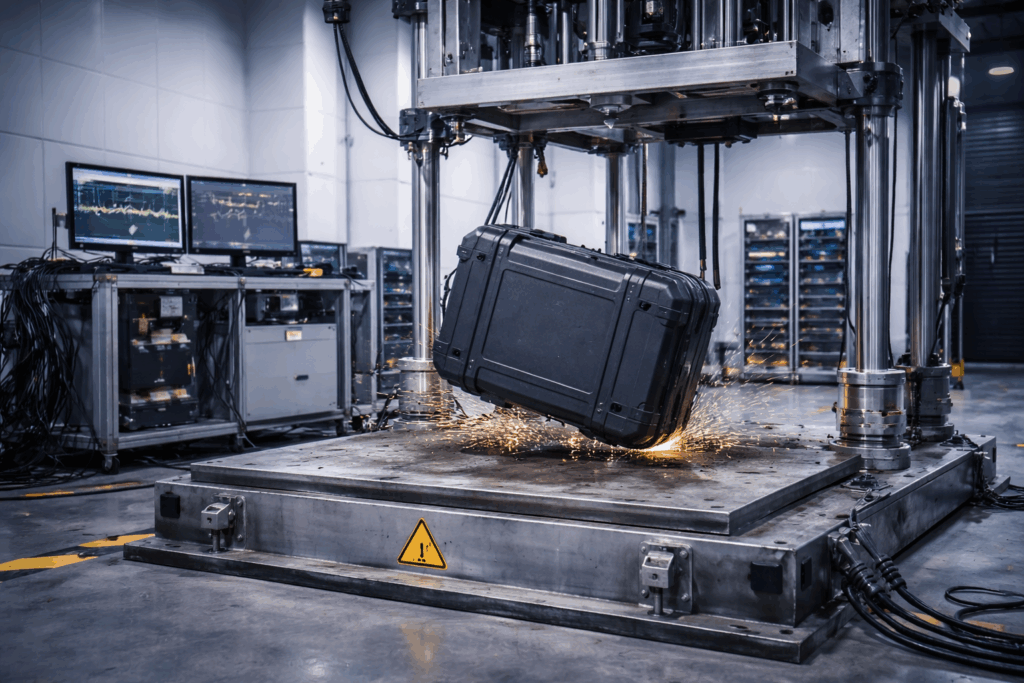
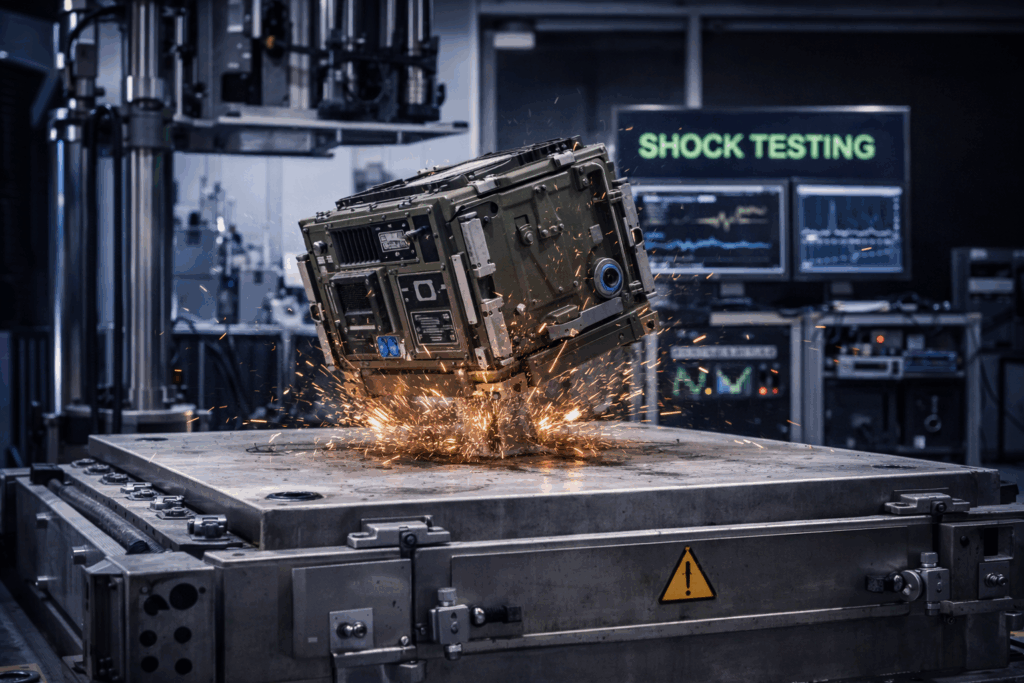
Mechanical Shock Testing evaluates a product’s ability to withstand sudden, high-intensity acceleration or deceleration forces that occur during handling, transportation, operational events, or impact scenarios. 

Unlike vibration testing, which simulates continuous oscillatory motion, mechanical shock testing replicates abrupt force events such as:

 

 Drop impacts

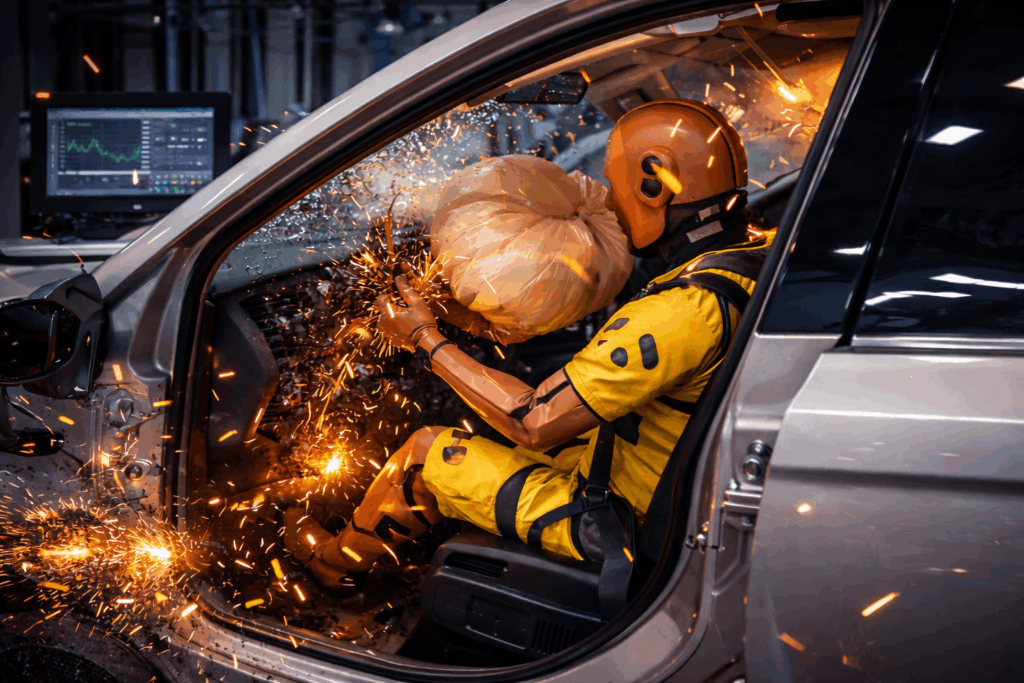
Crash or collision forces


Sudden acceleration/deceleration 


Handling and transport shocks 


  Explosive or high-G events 


Testing ensures that products maintain structural integrity and functional performance after exposure to sudden mechanical stress. 
 

Benefits

Why Perform Mechanical Shock Testing?

Mechanical Shock Testing helps manufacturers: 

  • Prevent catastrophic structural failure 
  • Validate survivability under high-G events 
  • Reduce field failures due to handling or transport damage 
  • Demonstrate compliance with military and aerospace standards 
  • Support telecom and NEBS qualification 
  • Improve overall mechanical durability 

Capabilities

Core Testing Methods

Eurofins MET Labs provides comprehensive mechanical shock testing using advanced shock generation systems and instrumentation. 

Controlled Shock Pulse Testing


  • Half-sine shock pulses 
  • Sawtooth shock pulses 
  • Trapezoidal shock pulses 
  • Programmable pulse shaping 

Drop & Impact Simulation

  • Transit drop testing 
  • Packaged product drop testing 
  • Component-level impact testing 
  • Handling shock simulation

High-G & Military Shock Testing

  • MIL-STD-810 mechanical shock
  • MIL-STD-202 shock methods 
  • MIL-STD-883 shock validation 
  • High-G acceleration testing 

Combined Mechanical Stress Testing

  • Shock combined with vibration
  • Shock with temperature exposure
  • Sequential mechanical stress programs

Need help determining your shock profile requirements?

Our engineers can assist in defining applicable standards, shock pulse characteristics, and survivability criteria.

Accreditation

Accredited Mechanical Shock Testing Laboratory

Eurofins MET Labs operates ISO 17025-accredited environmental simulation laboratories equipped with advanced shock machines, drop systems, vibration platforms, and combined environmental chambers. 


Mechanical shock testing is performed in accordance with: 

 

 Military standards (MIL-STD-810, MIL-STD-202, MIL-STD-883)  

IEC 60068 shock methods  

  GR-63 (NEBS) requirements 

  Aerospace and OEM specifications 

Manufacturer-specific qualification protocols 


Testing programs are tailored to replicate real-world shock conditions specific to product applications. 

Coverage

Our Mechanical Shock Testing services support manufacturers across: 

Aerospace and defense systems 

Telecommunications equipment (NEBS compliance) 

Automotive and EV components 

Industrial machinery 

Electrical and electronic equipment 

Marine and railway applications 

We work closely with engineering and compliance teams to ensure shock validation aligns with deployment environments. 

Need help determining your shock profile requirements?

Our engineers can assist in defining applicable standards, shock pulse characteristics, and survivability criteria. 

Certification

Mechanical Shock Testing for Compliance & Market Access

Mechanical Shock Testing plays a critical role in meeting qualification requirements for regulated and mission-critical industries. 

By validating impact survivability early in development, manufacturers can: 

            Improve compliance confidence 

            Support certification and OEM approval  

            Strengthen global market acceptance 

            Demonstrate durability in extreme environments 

            Reduce product redesign risk 


Our testing programs support both pre-compliance and full certification initiatives. 

   

Process

How Mechanical Shock Testing Works

Define Requirements

Identify applicable standards, impact conditions, and survivability criteria.

Test Program Development

Engineers design a structured shock test plan including pulse type, G-level, and duration.

Laboratory Testing

Controlled shock events are performed with precise instrumentation and monitoring. 

Data Analysis & Reporting

Acceleration data, functional performance results, and compliance documentation are provided in detailed technical reports.

FAQ

Answers to common questions about mechanical shock and vibration testing.


What is the difference between mechanical shock and vibration testing? 


Mechanical shock testing simulates sudden, high-intensity impact events. Vibration testing simulates continuous oscillatory motion over time. Both evaluate mechanical durability but address different stress mechanisms. 


Which standards require mechanical shock testing? 


Mechanical shock testing is commonly required under MIL-STD-810, MIL-STD-202, MIL-STD-883, IEC 60068, GR-63 (NEBS), and various aerospace and OEM specifications. 


Can shock testing be combined with environmental testing? 


Yes. Mechanical shock testing can be integrated with temperature, humidity, or vibration testing to simulate real-world operating conditions more accurately. 


Is mechanical shock testing required for telecom equipment? 


Yes. Many telecom standards, including GR-63 (NEBS), require mechanical shock validation to ensure survivability during transport and installation. 

Request a Quote for Mechanical Shock Testing

If your product must withstand high-impact events, transport shock, or military-level acceleration forces, our mechanical shock testing specialists are ready to assist.